
 |  |  |  |
|---|---|---|---|
 |  |  | |
 |  |  |  |
 |  |  |

💧
Students for Resilience (S4R)
Empowering the Next Generation of Resilience Leaders!
Learn - Collaborate - Create Solutions
Students for Resilience (S4R) is the youth leadership and mentorship initiative of Residents for Resilience (R4R), created to educate, inspire, and empower middle school, high school, and college students to become active participants in building healthier, more resilient, and more sustainable communities. We help students grow—from curious learners to confident leaders by connecting them with real-world experiences, trusted mentors, and meaningful opportunities to create solutions that strengthen healthier, more resilient communities.
At Residents for Resilience, we believe it's hard to care about what you don't know about. Our mission is to help close the information gap by connecting residents with trusted experts, practical solutions, and meaningful opportunities to become part of the conversation.
Students for Resilience extends that mission by providing students with real-world learning experiences that go far beyond the classroom. Through Residents for Resilience's growing network of universities, environmental organizations, government agencies, businesses, and community partners, Students for Resilience helps connect students with meaningful educational experiences, leadership opportunities, volunteer projects, internships, research collaborations, and mentorships that extend far beyond any single organization.
Whether students are interested in engineering, environmental science, biology, chemistry, communications, journalism, public policy, urban planning, landscape architecture, education, business, or community service, S4R offers opportunities to explore today's challenges while helping develop tomorrow's solutions.
Rather than simply learning about environmental issues, students are encouraged to become part of the solutions through research, education, innovation, collaboration, and community engagement. At S4R, we believe great ideas can come from anyone. Students are encouraged to ask questions, think creatively, share their ideas, and work alongside experienced mentors to help turn innovative concepts into meaningful community solutions.
Your Resilience Journey
Students for Resilience is designed to grow with you. Whether you're just beginning to explore environmental stewardship or preparing for a career in science, engineering, communications, public policy, education, business, or sustainability, S4R offers opportunities that match your interests, experience, and stage of learning.
Middle School – Discover & Explore
Students are introduced to environmental stewardship through fun, hands-on learning experiences that encourage curiosity, build confidence, and inspire a lifelong appreciation for our waterways and natural resources.
Students have opportunities to:
-
Participate in community service and environmental volunteer projects.
-
Explore water quality, conservation, wildlife, and resilience through interactive activities.
-
Meet scientists, engineers, educators, and environmental professionals.
-
Begin developing leadership, teamwork, and communication skills while making a positive difference in their community.
High School – Lead & Engage
High school students take a more active role through leadership opportunities, community engagement, and hands-on projects that connect classroom learning with real-world experience.
Students have opportunities to:
-
Earn volunteer service hours while participating in meaningful environmental projects.
-
Join or help establish Students for Resilience (S4R) clubs at their schools, including our growing partnership with St. Thomas Aquinas High School.
-
Participate in educational events, water quality investigations, community outreach, communications, photography, and social media.
-
Work alongside university researchers, scientists, engineers, environmental organizations, business leaders, and local government professionals while developing leadership and project management skills.
College & University – Innovate & Lead
College students have opportunities to deepen their involvement through internships, research collaborations, mentorship, communications, professional networking, and real-world project experience.
Students have opportunities to:
-
Participate in university research, pilot projects, and resilience initiatives.
-
Contribute articles, photography, videos, podcasts, and educational content for Residents for Resilience.
-
Mentor younger S4R students while gaining valuable leadership experience.
-
Build professional relationships with experts across academia, government, nonprofit organizations, and the private sector.
As students grow, so do the opportunities available to them. Our goal is to create a pathway that encourages curiosity, develops leadership, inspires innovation, and empowers students to become lifelong environmental stewards and future resilience leaders.
Areas of Focus
ARE YOU INTERESTED IN ANY OF THE FOLLOWING?
-
Water quality improvement and waterway restoration
-
Flood mitigation and innovative stormwater management
-
Retrofitting parks and public spaces to improve resilience and reduce flooding
-
Nature-based solutions, including living shorelines, mangroves, oyster restoration, and native habitat enhancement
-
Biochar research and other emerging technologies designed to improve water quality
-
Coastal resilience, sea level rise adaptation, and climate preparedness
-
Sustainable community planning and environmental stewardship
-
Community education, public outreach, and science communication
-
Research initiatives and pilot projects evaluating innovative environmental solutions
The S4R Leadership Experience
Students for Resilience is more than a volunteer program—it's an opportunity to gain real-world experience while building relationships with professionals working to create healthier,
more resilient communities.
As an S4R participant, students may have opportunities to:
🌎 Work alongside university researchers, scientists, engineers, environmental organizations, business leaders, local government officials, and community partners.
🌱 Participate in environmental research, field studies, and water quality investigations.
🌊 Learn about living shorelines, oyster restoration, mangroves, biochar, and other nature-based solutions that strengthen ecosystems and improve community resilience.
🌳 Explore innovative approaches to retrofitting parks and public spaces to improve stormwater management, reduce flooding, increase urban tree canopy, and create healthier neighborhoods.
🧪 Observe or participate in pilot projects evaluating emerging technologies designed to improve water quality and environmental resilience.
🎤 Interview scientists, educators, planners, elected officials, and community leaders while helping share their work through articles, photography, podcasts, videos, newsletters, and social media.
🤝 Participate in educational programs, volunteer projects, workshops, and community outreach events that connect residents with practical resilience solutions.
🎓 Earn volunteer service hours, internship experience, leadership opportunities, and valuable professional connections.
💡 Develop critical thinking, communication, leadership, teamwork, and problem-solving skills while making a meaningful difference in the community.
🚀 Share your ideas, explore creative solutions, and help turn innovative concepts into real-world projects that strengthen our communities.
Building Partnerships - Creating Opportunities - Inspiring Future Leaders
One of the things that makes Students for Resilience unique is the opportunity to learn through collaboration. Residents for Resilience brings together universities, scientists, environmental organizations, businesses, educators, local governments, and community leaders who share a common goal of building healthier, more resilient communities.
These partnerships help bridge the gap between education and real-world experience, giving students the opportunity to learn from professionals, contribute to meaningful projects, and better understand how collaboration drives innovative solutions to today's environmental challenges.
Students for Resilience connects students with opportunities offered by our growing network of partner organizations, universities, environmental nonprofits, schools, businesses, and public agencies. We help students discover internships, leadership programs, volunteer experiences, educational events, and research opportunities that support their interests while strengthening our communities.
Our Growing Network Includes Collaborations With:
🎓 Universities
-
Florida International University (FIU)
-
University of Miami (UM)
-
Nova Southeastern University (NSU)
-
University of Florida (UF)
-
Florida Atlantic University (FAU)
🌿 Environmental & Community Partners
-
Florida Sierra Club
-
Friends of the Everglades
-
Right to Clean Water
-
Mangrove Keeper
-
Miami Waterkeeper
-
Everglades Oyster
-
Ocean Rescue Alliance International
🔬 Research & Innovation Partners
-
Biotech Applied Research (Biochar)
-
molluSCAN-eye®
🤝 Education & Community Partners
-
Local schools and student leadership programs
-
Rotary
-
Businesses and industry leaders
-
Local governments and public agencies
...and a growing network of organizations and professionals committed to building healthier waterways, stronger communities, and a more resilient future.
Summer Opportunities
Although our regular school-year programming pauses during the summer, Students for Resilience continues to offer internship and volunteer opportunities for students interested in staying engaged, gaining experience, and helping prepare for future initiatives. Summer is also a great time for students to explore new ideas, connect with mentors, and begin developing projects that can continue throughout the upcoming school year.
🚀 Have an idea for a project? We'd love to hear it. Some of tomorrow's best resilience solutions may begin with a single student asking a great question.
Our Vision
We believe students are not simply the leaders of tomorrow—they are valuable partners today. By connecting young people with experienced mentors and meaningful projects, S4R encourages curiosity, innovation, collaboration, and civic engagement while helping prepare the next generation of scientists, engineers, planners, educators, policymakers, business leaders, environmental professionals, and community advocates.
Our vision is to cultivate future leaders who understand the importance of protecting our water resources, strengthening community resilience, restoring our natural ecosystems, and working collaboratively to solve complex environmental challenges.
We believe some of tomorrow's most innovative resilience solutions may come from today's students. Through mentorship, collaboration, and hands-on experience, Student's 4 Resilience provides opportunities for young people to ask questions, share ideas, challenge conventional thinking, and help shape projects that make a lasting impact.
Join Students for Resilience
Your ideas matter. Your voice matters. Your actions matter!
Whether you're a middle school student discovering a passion for the environment, a high school student looking to make a difference, or a college student preparing for a career in science, engineering, communications, education, business, public policy, or sustainability—there's a place for you at Students for Resilience.
No matter where you are on your journey—whether you're exploring your interests, preparing for college, or already pursuing a path in science, engineering, communications, education, public policy, business, or sustainability—we would be honored to welcome you to the Students for Resilience family. Bring your curiosity, your talents, and your ideas, and discover how you can help make a lasting difference in your community.
Together, we are preparing the next generation of resilience leaders—one student, one idea, one project, one partnership, and one community at a time.
Complete the form below or email us at:
📩 info@residentsforresilience.org
We look forward to welcoming you to the Students for Resilience family - working alongside you as we learn, collaborate, innovate, and build a more resilient future—together.
Stay Informed • Stay Connected • Stay Resilient


STUDENTS FOR RESILIENCE CORNER
Educating • Engaging • Empowering the Next Generation
Welcome to the S4R Corner — a new space for students to share what they’re learning, exploring, creating and accomplishing throughout the year.
WELCOME TO THE S4R CORNER
Students for Resilience is about more than learning about the challenges
facing our communities — it’s about giving students opportunities to
become part of the solutions.
The S4R Corner is where we’ll share what our students are doing throughout
the year — from classroom conversations and hands-on projects to
research, service, mentorship, innovative ideas and real-world problem solving.
It’s also a place to celebrate their accomplishments, hear their perspectives
and follow the ideas and solutions they develop along the way.
Because when we educate, engage and empower the next generation,
there’s no telling where their ideas might lead.
 |  |  |
|---|---|---|
 |  |  |
💧 LATEST FROM THE S4R CORNER
What Better Way to Kick Off the New School Year Than
by Talking About Solutions!
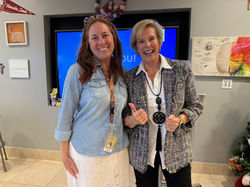
Students in the Engineering Design & Development program at American Heritage Broward recently welcomed Residents for Resilience for a conversation about R4R’s four critical water issues — and, most importantly, an opportunity to
think about solutions.
The students were engaged and curious throughout the presentation, asking terrific questions and sharing thoughtful comments and ideas — exactly the kind of conversation Students for Resilience was created to encourage.
A special thank you to Anabel Nogueiras, Mohanalatha Pamajala, Carmen Mendez and Massimo Salafia for welcoming R4R and for encouraging these talented students to question, explore, create and think critically about real-world challenges.
And this is just the beginning!
R4R looks forward to continuing its work with students at American Heritage, St. Thomas Aquinas, and other schools and universities throughout South Florida — creating opportunities for hands-on projects, research, service, mentorship and real-world problem solving.
Some of these students will now take what they’ve learned and begin exploring solutions to the very water and resilience challenges
affecting our communities today.
We can’t wait to see what they come up with! 💙
Stay informed • Stay connected • Stay resilient.
 |  |  |  |
|---|---|---|---|
 |  |  |  |
 |  |  |  |
STUDENT SPOTLIGHT
STUDENT SPOTLIGHT | Anna
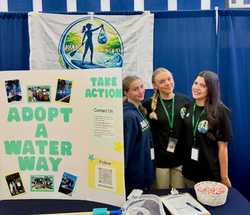
ADOPT-A-WATERWAY: One Cleanup at a Time
What can one student do to help protect the waterways in her own community? Quite a lot.
Through R4R’s Adopt-A-Waterway initiative, Anna Finneran has helped turn concern for our local waterways into action — bringing students and community members together to remove trash, raise awareness and better understand how what happens on land can ultimately affect the water around us.
For Anna, the experience has also been about something bigger: showing that students don't have to wait until they're older to make a difference.
Read Anna's Story in R4R Voices →
🎓 STUDENT SPOTLIGHT | Parker
As part of R4R’s Summer Internship Program, Parker Jacobson-Bertanzetti, helped develop the structure, goals and rollout plan for Students for Resilience — helping lay the groundwork for a program designed to engage and empower students through education, mentorship, hands-on experiences and real-world problem solving.
Parker also had an extraordinary opportunity to participate in the Research Scholars Hawaii Program, an experience that expanded her understanding of environmental research and helped shape her interest in resilience and conservation.
Read Parker’s story in R4R Voices →


 |  |  |  |
|---|---|---|---|
 |  |  |  |
 |  |  | |
 |  | |  |
 |  |  |  |
 |  |  |  |
 |  |  |  |
 |  |  |  |
 |  |  |

What a special Earth Day week it has been!
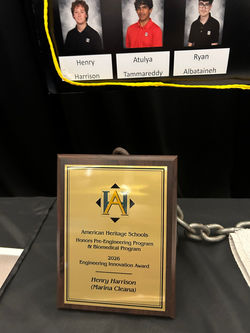
R4R has been incredibly inspired by the next generation of thinkers and problem-solvers—from attending the 15th Annual Senior Engineering Design & Development (EDD) Showcase at American Heritage, to celebrating the incredible work of students through our partnership with Florida International
University’s Environmental Writing Project, and meeting so many environmentally passionate students at the St. Thomas Aquinas Earth Day event.
At FIU, we had the opportunity to see these talented students present their
final projects—bringing creativity, critical thinking, and thoughtful solutions to real-world environmental challenges. Through their work, students developed
content, strategies, and ideas that help advance our mission to fill the information gap around South Florida’s most critical water issues.
They also shared a number of innovative recommendations to enhance our
website and messaging—many of which we’ve already begun implementing, with plans to continue building on their ideas. We are truly grateful for the time, passion, and dedication each student brought to this collaboration, and we look forward to continuing our work with these incredible students.
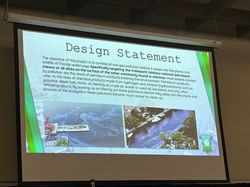
At the American Heritage showcase, we had the opportunity to watch several student teams present impressive capstone projects developed in collaboration with Residents for Resilience, with mentorship from members of our Expert Advisory Team—highlighting solutions tied directly to our
four critical water issues.
These included innovative concepts such as flood protection systems for vehicles, oil mitigation solutions for marinas, and an autonomous water monitoring and sampling device designed to efficiently collect
and deliver water samples.
We were truly blown away by the level of innovation, creativity, and technical skill—and so encouraged by the thoughtfulness behind their work. Beyond the projects themselves, t was inspiring to see the dedication, collaboration, and passion demonstrated by all of the students who participated in the showcase.
We were equally inspired meeting so many engaged and curious students at the
St. Thomas Aquinas Earth Day event, and are excited to welcome many new members to our growing Students for Resilience (S4R) community.
At Residents for Resilience, we believe:
“It’s hard to care about what you don’t know about.”
Through S4R, we are helping to fill the information gap—connecting students
with real-world environmental issues, expert insight, and meaningful opportunities to better understand the challenges facing
South Florida’s water issues.
S4R was created to empower students not only to learn, but to take that knowledge and become part of real solutions. These students give us hope for a brighter, more resilient future—and we’re
honored to support and learn alongside them!
 |  |  |  |
|---|---|---|---|
 |  |  |  |
|  |  |  |
 | |  |  |
 |
COLLEGE CONNECTIONS
FIU — Continuing Our Student Partnership
Continuing Our Student Partnership
with Florida International University!
A sincere thank you to Florida International University for once again inviting Residents for Resilience (R4R) to partner through their Spring 2026 Writing About the Environment course — an exciting collaboration that continues connecting students with real-world environmental issues
shaping South Florida.
We are especially pleased to continue expanding our partnership with Dr. Marta Gierczyk, and Lucas, Luke Rodewald, and FIU’s Department of English and Community Partnerships program.
As part of this collaboration, we were invited to introduce students to the R4R mission and share our presentation on the four critical water issues that guide our work:
Safe, clean drinking water
Flood mitigation
Storm resiliency
Restoring the health of our priceless waterways
Students will now begin developing environmental storytelling projects tied to real-world environmental concerns, with R4R helping guide project development and connecting classroom
learning to meaningful community impact.
We are always encouraged by the thoughtful questions, ideas, and discussions that follow these presentations. Vice President Tricia Halliday also joined the discussion, helping contribute
to the thoughtful exchange that followed.
Our future looks brighter when students are encouraged to think critically about the environmental challenges facing South Florida and explore how communication, science, and collaboration
can help shape practical solutions.
R4R's Students for Resilience initiative continues to grow by engaging students through:
• mentorship
• project collaboration
• internships
• community engagement
• exposure to scientists, engineers, professors, and environmental professionals
These conversations matter — because informed communities are resilient communities,
and the next generation has an important role to play in shaping that future.
Thank you again to FIU for welcoming R4R into these important conversations!
Florida International University
Presented Their Final Projects For Their
Document Design and Visual Rhetoric Course.
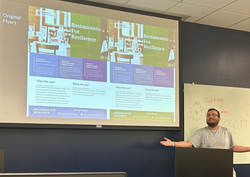
R4R had the pleasure of sharing a wonderful experience with some incredibly talented students at FIU as they presented their final projects for the Document Design and Visual Rhetoric course. Their professor, Dr. Luke Thominet, reached out to R4R to collaborate on this initiative, which connects students with local organizations to gain hands-on experience working on real design projects.
We were honored to participate and, as always, welcome opportunities to engage with students, schools, and universities. The graphic designs the students presented were impressive, and Dr. Thominet expressed his enthusiasm for partnering with Residents for Resilience. He noted that, as a newer organization making significant contributions to South Florida’s communities and ecosystems, our advocacy for safe drinking water, flood mitigation, coastal resiliency, and waterway restoration aligned perfectly with their goal of creating impactful visual communications.
We look forward to continuing our collaboration with FIU in 2025! Great job! 👍

In this interview, Suzee Bailey, the founder of Resident’s for Resilience, talks about where she grew up, how her parents influenced her, and the main goals of her organization. She grew up around lakes and was always fascinated by water.
Later, she moved to Ft. Lauderdale, Florida. She was paddle boarding in this area after a
major sewer spillage, and she contracted MRSA from being exposed to the
contaminated water. This moment marked the beginning of her water advocacy efforts.
She is most concerned with bridging the information gap, making sure that residents
are aware of water contamination so that they can take preventative
measures to prevent infection.
She is also interested in proposing water restoration efforts such as bringing back
native oyster species which can filter the water, or mangrove
panels which can serve as storm walls.
She also expressed concern about the housing situation in South Florida, and the need to
elevate certain areas to avoid them being underwater in the near future.


 |  |  |  |
|---|---|---|---|
 |  |  |  |
 |  |  |  |
 |  |  |  |
 |  |  |  |
 |  |  |  |
 |  |
🌊 A Big Thank You to
New River Middle School! 🌊
R4R would like to extend a BIG THANK YOU to New River Middle School and Broward County’s Marine Science Magnet Program, along with Magnet Coordinator Elizabeth Fahy, for inviting us to participate in their fantastic 3rd Annual Mission Possible:
Sharks in Action Event.
This incredible event focused on educating the community about the importance of our priceless waterways and promoting their Living Shoreline project, which is actively progressing at the back of their riverfront campus with newly planted mangroves!
Tricia Halliday and I were truly impressed by the educational, marine environmental project-based learning activities showcased by the teachers and their students. Many of these nature based activities were relevant to our R4R future waterway remediation goals!
This impressive community engagement not only educated attendees but also brought together local stakeholders, including Nova Southeastern University marine specialist, SEAFAN, US Army Corps of Engineers, Guy Harvey Ocean Foundations, Florida Department of Environmental Protection Coral Specialists, @Representative Chip LaMarca, MangroLife’s Jessica Basi, and Katherine O’Fallon from Marine Research Hub of South Florida —who previously served as the coordinator of this excellent school for over 10 years. It was so inspiring to see the younger generation actively engaged in critical waterway issues.
We wholeheartedly support their future “Mission Possible” dream of a FLOATING CLASSROOM, which aims to transform a portion of their waterfront campus into an extension of the New River shoreline, complete with mangroves, oysters, and an enhanced marine environmental learning experience!
Thank you once again for the opportunity to be part of such an impactful event!
R4R Summer Internship Program
Designed to provide motivated students with a unique opportunity to engage directly in real-world environmental resilience work. Interns work alongside community leaders, environmental specialists, and educators to research, design, and propose actionable solutions to some of our most pressing water-related challenges.
Interested in a Summer Internship?
Contact us at: Info@residentsforresilience.org
Together, we’re building a movement led by the next generation of environmental leaders! 🌱🌊✨
Stay informed - Stay Connected - Stay Resilient