PROTECT OUR WATERWAYS AND OCEAN
See it - Snap it - Share it!

Your Eyes and Ears Can Make a Difference
Our residents are often the eyes and ears of our waterways. If you see pollution, an unusual discharge, wildlife in distress, debris, flooding or stormwater concerns — or simply something that doesn’t look right — please document it and speak up.
Take a photo or video when it is safe to do so, note the location, date, time and
what you observed, and report the concern to the appropriate agency.
Please Copy Residents for Resilience
When you make a report, please copy R4R at info@residentsforresilience.org.
Having a second set of eyes and ears helps us stay aware of concerns being reported throughout our community, recognize recurring issues, connect with the appropriate contacts when needed, and help make sure residents' voices and concerns are seen and heard.
Not sure who to contact?
We've made it easier. Use the Environmental Reporting Resources below to
find the appropriate local, county, state or federal agency for your concern.
See What Residents Are Seeing
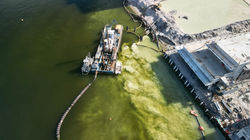
These are just a few of the waterway concerns residents have documented and shared with R4R.
 |  |  |  |
|---|---|---|---|
 |  |  |  |
 |  |  |


SEDIMENT & HIGH TURBIDITY
Why does it matter?
What happens at a construction site doesn't always stay at the construction site.

🌊 SEE IT. SNAP IT. SHARE IT. — SEDIMENT
& STORM WATER MATTERS
Construction and dredging projects are sometimes necessary — but protecting
our waterways during that work matters too.
When soil, sand and sediment are disturbed near or within a waterway,
they can create turbid, cloudy water. If sediment travels beyond the work area, it can
affect water quality and potentially impact seagrass, corals and other aquatic habitat.
Stormwater runoff can contain a wide array of pollutants.Common contaminants include trash,
soil and sediment, fecal bacteria, nitrogen and phosphorus (often from fertilizers), oil and
other petroleum products, pesticides and herbicides, road salt, and heavy metals like copper, lead, and zinc, according to the Chesapeake Bay Foundation. Other pollutants found in stormwater
include animal waste, eroded sediment, and various chemicals like those found in automotive
fluids and industrial solvents.
🎥 These videos were shared with Residents for Resilience by concerned residents who noticed
sediment in the water during nearby construction or dredging activity.
Seeing cloudy or discolored water does not by itself tell us whether a project is out of compliance.
But it is worth documenting — particularly when sediment appears to be escaping a work area,
turbidity barriers appear ineffective, or conditions persist.
If you see something, say something!
📍 Note the exact location
📅 Include the date and time
📸 Take photos or video from a safe location
📝 Note the project or activity, if known
📣 Report your concern to the appropriate agency
📧 And please copy R4R: info@residentsforresilience.org
Keeping R4R informed gives our community a second set of eyes and ears.
It helps us identify recurring concerns, ask questions, connect with the appropriate
contacts when needed, and help make sure residents' concerns are seen and heard.
It’s hard to care about what you don’t know about.
💙🌊 Our Waterways. Our Home. Our Responsibility.
I
Environmental Reporting Resources
See something? Say something. If you observe pollution, an unusual discharge, sewage, debris, flooding, wildlife in distress, a fish kill, damage to marine resources, or another environmental concern,
report it to the appropriate agency.
*Please copy Residents for Resilience on your report at info@residentsforresilience.org.
Keeping R4R informed gives our community a second set of eyes and ears and helps us stay aware of reported concerns, recognize recurring issues, connect with the appropriate contacts when needed, and help make sure residents' voices and concerns are seen and heard.
LOCAL & COUNTY REPORTING:
City of Fort Lauderdale — FixIt FTL
For non-emergency City issues including flooding, storm drains, infrastructure and other City service concerns. Residents can submit online or call 954-828-8000. Reports submitted through FixIt FTL are routed to the appropriate City department and can be tracked.
REPORT TO FIXIT FTL →
Broward County — Environmental Complaints
For activities that may impact water, air, soil or other natural resources. Broward's environmental complaint line is available 24/7 at 954-519-1499. For an environmental emergency, Broward directs residents to call 911 and then the environmental complaint line.
REPORT A BROWARD COUNTY ENVIRONMENTAL CONCERN →
Miami-Dade County — DERM Environmental Complaints
For spills or discharges into waterways or storm drains, sewage overflows, hazardous materials, turbid/cloudy water discharges, fish or bird kills, mangrove impacts, dredging/filling and other environmental concerns. The DERM complaint desk is available 24/7 at 305-372-6955, and reports can also be submitted online. Miami-Dade specifically notes that photos and videos can help with an investigation.
REPORT A MIAMI-DADE ENVIRONMENTAL CONCERN →
Palm Beach County — Environmental Resources Management (ERM)
For concerns involving coastal resources, reefs, estuaries, Lake Worth Lagoon, freshwater resources, surface water, petroleum contamination, natural areas and other environmental resources. Main ERM number: 561-233-2400.
PALM BEACH COUNTY ENVIRONMENTAL RESOURCES →
Collier County — Pollution Control
For pollutant releases including sewage, petroleum and hazardous substances, fish kills, red tide, illegal dumping and other conditions that may negatively affect the environment. Call 239-252-2502 or submit a complaint online.
REPORT A COLLIER COUNTY POLLUTION CONCERN →
Monroe County / Florida Keys — Code Compliance
For environmental and other County code violations in unincorporated Monroe County. Complaints can be filed online; Monroe County notes that identifying information is generally required for code complaints under Florida law, subject to the imminent-threat exception described on its site.
MONROE COUNTY REPORTING →
FLORIDA & REGIONAL REPORTING
Florida Department of Environmental Protection (FDEP)
For oil, fuel and hazardous-material spills, Florida provides the State Watch Office: 800-320-0519, 24 hours a day. FDEP recommends providing the location, date/time, substance involved if known, affected area and other agencies contacted.
FDEP DISCHARGE & SPILL REPORTING →
Florida Fish and Wildlife Conservation Commission (FWC)
This is an important one for R4R. FWC provides reporting channels for fish kills, injured or dead manatees, wildlife emergencies, marine debris, coral bleaching/disease and other wildlife or marine concerns. Fish kills: 800-636-0511. Sick, injured or dead manatees: 888-404-3922. FWC also provides a specific reporting resource for marine debris and coral bleaching/disease in Southeast Florida.
FWC INCIDENT & WILDLIFE REPORTING →
South Florida Water Management District (SFWMD)
For regional water-management, water-resource, permitting and related concerns. SFWMD serves a 16-county jurisdiction and provides regional contacts throughout South Florida. Main office: 561-686-8800 or 800-432-2045 (Florida only).
SFWMD CONTACTS & REGIONAL OFFICES →
FEDERAL REPORTING
U.S. Environmental Protection Agency (EPA)
For suspected violations of federal environmental laws. EPA's online reporting system sends submitted information to EPA enforcement personnel or the appropriate regulatory authority.
REPORT AN ENVIRONMENTAL VIOLATION TO EPA →
National Response Center — Oil & Chemical Spills
For oil, chemical, radiological, biological and other qualifying environmental discharges, call the National Response Center at 800-424-8802. It is staffed 24 hours a day by the U.S. Coast Guard.
NATIONAL RESPONSE CENTER →
🚨 Is It an Emergency?
If there is an immediate threat to human life, public health or safety, call 911 first.
For a significant oil, chemical or hazardous-material spill:
Florida State Watch Office: 800-320-0519
National Response Center: 800-424-8802
And remember...
PLEASE COPY R4R 📧
When you submit a report, please copy info@residentsforresilience.org
and include any report or case number you receive.
A second set of eyes and ears can make a difference!