IMPORTANT QUESTIONS CONCERNING
ARTIFICIAL TURF?
Artificial Turf -Some Call It "Plastic Grass"
Important questions that may need to be asked about heat,
materials, environmental exposure, and long-term public health considerations.

PLASTIC GRASS: A CONVERSATION WORTH HAVING
What are we really putting in our parks?
Artificial turf — or what many refer to as “plastic grass” — has become increasingly common in parks, playgrounds and athletic fields. It may offer certain maintenance and durability benefits, but important questions are also being raised about its potential impacts on heat, public health, stormwater, water quality, plastic pollution and the environment.
Those questions are particularly relevant here in South Florida.
Artificial turf can become significantly hotter than natural grass under direct sun, raising concerns about heat exposure for children, athletes and other park users. Researchers and environmental-health specialists have also raised questions about chemicals associated with some artificial turf systems, including PFAS, as well as microplastics and other materials that can potentially migrate from synthetic surfaces into the surrounding environment.
And in a community where we are already working to address flooding, stormwater runoff, extreme heat and water quality, there is another important consideration: what are we giving up when we replace living landscapes with large synthetic surfaces?
Natural grass and healthy soils can help cool surrounding areas and absorb, slow and filter rainfall. Those are benefits worth considering as Fort Lauderdale continues
investing in more resilient parks and public spaces.
FROM INFORMATION TO CONVERSATION
Fort Lauderdale’s Sustainability Advisory Board (SAB) has been examining artificial turf and has heard from environmental-health experts regarding potential health, heat and
environmental concerns. Now that conversation is moving to the City Commission.
WANT TO HEAR WHAT THE SAB IS RECOMMENDING?
Join us on Tuesday, October 6, when Suzee Bailey, R4R Founder and CEO, will appear before the Fort Lauderdale City Commission Conference Meeting in her separate capacity as a member of the City’s Sustainability Advisory Board.
Suzee will present the SAB’s formal recommendation regarding artificial turf and natural grass in Fort Lauderdale’s public parks and recreational spaces.
Please note: Suzee will be speaking in her capacity as a member of the City of Fort Lauderdale
Sustainability Advisory Board, not on behalf of Residents for Resilience.
At Residents for Resilience, we believe residents deserve access to the information needed to understand issues affecting their community and the opportunity to follow the
conversations and decisions that can help shape its future.
Because, as we often say:
“It’s hard to care about what you don’t know about.”


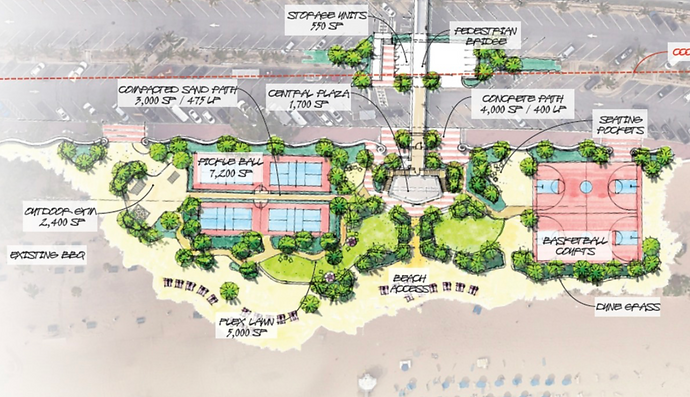
PLASTIC GRASS ON
FORT LAUDERDALE BEACH?


Helpful Research Resources
Helpful Research Research on artificial turf materials continues to evolve. The resources below provide a range of perspectives from public health agencies, scientists, and environmental researchers to help inform ongoing public discussion.
Tire Crumb Rubber Research Reports
EPA research examining how people may be exposed to materials used in synthetic turf fields and how those exposures occur during sports and recreation.
Medical & Environmental
Health Research
Mount Sinai Children’s Environmental Health Center – Artificial Turf Position Statement
Explains how children may be exposed to chemicals on artificial turf through inhalation, skin contact, ingestion, and open wounds during normal play.
Children’s Environmental Health Network – Crumb Rubber & Artificial Turf Fact Sheet
Summarizes research identifying chemicals that may be present in recycled tire crumb rubber used in turf systems, including PAHs, VOCs, metals, and other compounds.
Position Statement on the Use of Artificial Turf Surfaces
May 29, 2025https://mountsinaiexposomics.org/position-statement-on-the-use-of-artificial-turf-surfaces/
What does research say about grass vs. artificial turf safety debate in sports?
New York State Department of Health –
Synthetic Turf Fact Sheet
Provides an overview of crumb-rubber turf systems and ongoing research examining chemicals, heat exposure, and potential environmental impacts.

Artificial Turf ("Plastic Grass"):
Questions Worth Asking
At Residents for Resilience (R4R), we believe informed public discussion begins with asking thoughtful questions and making sure communities have
access to science-based information.
As artificial turf continues to be installed in parks, playgrounds, athletic fields, and public spaces, many residents have raised important questions about how these synthetic surfaces perform over time — particularly in hot climates like South Florida, where heat, heavy rain, stormwater runoff, and long-term material exposure
may present additional health and environmental concerns.
Because it’s hard to care about what you don’t know about,
we believe this is an issue worth understanding carefully.
⚠️ Key Questions
That Need to Be Asked
Before expanding the use of artificial turf in our communities, it is important to ask:
-
What chemicals and materials are used in artificial turf systems?
-
How does artificial turf impact air quality and human exposure—especially under high heat?
-
What are the potential risks for children, athletes, and pets?
-
How does artificial turf affect stormwater runoff and flood mitigation?
-
What happens as turf ages, breaks down, and is disposed of?
-
Are there long-term impacts on surrounding soil, waterways, and ecosystems?
👉 These questions are supported by growing research identifying concerns related to chemical exposure, microplastics, heat, and environmental impacts.
Why This Discussion Matters
Artificial turf is often promoted as low-maintenance and durable, but growing scientific discussion continues around how synthetic turf materials behave
under prolonged heat, wear, and environmental exposure.
Questions increasingly being raised include:
• extreme surface heat that can create unsafe temperatures for children, athletes, and park users
• potential vapor release during high heat exposure from rubber and plastic-based materials
• turf dust and particulate exposure resulting from wear over time
• plastic fiber breakdown entering surrounding soil, stormwater systems, and nearby waterways
• landfill burden when fields reach the end of their useful life
• broader long-term environmental and public health questions still being actively studied
🧪 Chemicals & Human Exposure
Studies have identified a wide range of chemicals in artificial turf materials, including:
-
Heavy metals (lead, cadmium, zinc)
-
Volatile organic compounds (VOCs)
-
Polycyclic aromatic hydrocarbons (PAHs)
-
Per- and polyfluoroalkyl substances (PFAS), often called “forever chemicals”
Some of these substances are associated with carcinogenic, neurotoxic, or endocrine-disrupting properties, though research on direct human health outcomes remains ongoing and incomplete.
Importantly, studies show these materials can be released into air, dust, and stormwater runoff, creating multiple exposure pathways. ScienceDirect+1
☀️☔️🌊Why South Florida Requires
Special Attention
South Florida presents unique conditions that make
this discussion especially important.
High temperatures, intense sunlight, heavy rainfall, and close proximity to waterways mean that material choices in public spaces may carry additional implications for both environmental performance and human exposure.
Questions worth asking include:
• How hot do artificial turf surfaces become during summer months?
• How does stormwater move across synthetic surfaces?
• What enters nearby drains, canals, and waterways over time?
• What happens when turf systems require replacement?
🌡️ Heat & Urban Impact
Artificial turf can reach significantly higher surface temperatures than natural grass, particularly in sunny environments like South Florida.
Unlike natural grass—which cools through evapotranspiration—synthetic surfaces retain and radiate heat, contributing to:
-
Elevated surface temperatures
-
Increased risk of heat-related illness
-
Amplification of the urban heat island effect
These heat-related concerns are consistently identified across scientific reviews and environmental studies. NJDEP+1
💧 Water, Flooding & Stormwater Considerations
Natural landscapes play a critical role in absorbing rainwater, filtering pollutants, and reducing localized flooding.
Research has raised concerns that artificial turf systems may:
-
Contribute to stormwater runoff and pollutant transport
-
Release chemicals such as metals and PFAS into runoff
-
Require ongoing maintenance to maintain permeability
Studies confirm that toxic chemicals and metals can be detected in stormwater runoff from artificial turf installations, raising concerns for downstream waterways.
🌱 Environmental & Lifecycle Impacts
Artificial turf is composed primarily of plastic materials derived from fossil fuels. Over time, these materials can:
-
Break down into microplastics
-
Migrate into surrounding soil and waterways
-
Create challenges related to waste disposal and recycling
Research highlights that artificial turf contributes to microplastic pollution, environmental contamination, and end-of-life waste challenges, with limited long-term disposal solutions currently available. NCCEH+1
🌿 Nature-Based Alternatives
There are proven alternatives that support recreation while enhancing environmental resilience:
-
Natural grass systems (properly maintained)
-
Tree canopy and shaded spaces
-
Bioswales and rain gardens
-
Green infrastructure and nature-based shoreline solutions
These approaches help:
-
Reduce heat
-
Improve water quality
-
Support biodiversity
-
Strengthen flood mitigation efforts
🤝 Moving Forward—Together
While artificial turf may offer certain functional benefits, the current body of research highlights data gaps, uncertainties, and potential risks that warrant further study and careful consideration.
At Residents for Resilience, we believe strong communities are built on:
-
Transparent information
-
Science-based decision-making
-
Open dialogue
🌊 Be Part of the Conversation
Together, we are making waves of change.
Expert Voices Helping Inform
the Discussion
To help bring science-based information into public conversation, two respected specialists will be spoke at an upcoming Sustainability Advisory Board meeting:
Sarah Evans
PhD, MPH
Associate Professor
Children’s Environmental Health Center
Icahn School of Medicine at Mount Sinai
Susan Chapnick
Vice-Chair, Arlington Conservation Commission
President & Principal Scientist (retired), NEH, Inc.
We are planning on inviting Dr. Sarah and Susan to speak at an upcoming Waterlogged event - would love to her your thoughts!
READ MORE
📚 References & Research
-
National Collaborating Centre for Environmental Health (NCCEH): Artificial Turf Playing Fields – Review of Health Risks and Environmental Impacts READ MORE
-
New Jersey Department of Environmental Protection (NJDEP): Synthetic Turf Scientific Review (2025) READ MORE
-
U.S. Stormwater Research: Water Quality Impacts from Artificial Turf READ MORE
-
Washington State Department of Ecology: Chemicals in Artificial Turf Runoff Study READ MORE
-
Environmental Pollution Journal: Health Impacts of Artificial Turf READ MORE
-
Environmental Health Research (CHE/TURI): Synthetic Turf Chemical & Exposure Concerns READ MORE
R4R’s Role
As with many evolving environmental and public health discussions, research surrounding artificial turf continues to develop. R4R’s goal is not to tell communities what to think, but to help fill the information gap by sharing credible resources, encouraging thoughtful questions, and supporting informed discussion as residents and public leaders consider both short-term and long-term impacts.
Because Informed Communities Build
Stronger Communities
The goal is simple:
*Ask thoughtful questions.
*Review sound science.
*Understand long-term impacts.
*Make informed choices.
Because resilience also includes what we place on the ground beneath us.


